
Our MD/PhD Advisory Board

-
Dr. Concetta Tomaino is the Executive Director and Co-Founder of the Institute for Music and Neurologic Function and former Senior Vice President for Music Therapy at CenterLight Health System (formerly Beth Abraham Family of Health Services), where she worked from 1980 to 2016. In 2017, she and the IMNF relocated to the campus of Wartburg, a senior residential and healthcare facility, in Mt. Vernon, NY.
Dr. Tomaino is internationally known for her research in the clinical applications of music and neurologic rehabilitation. She lectures on music therapy throughout the world.
Her work has been featured in national programs including 48 Hours and 60 Minutes; in international programs including theBBC; and in books on health and healing. Musicophilia, by Dr. Oliver Sacks is dedicated to her.
Dr. Tomaino is Past-President of the American Association for Music Therapy and Past-Vice President and Founding Board Member for the International Association for Music and Medicine.
She received the Award of Accomplishment from Music Therapists for Peace at the United Nations. In 2014, she received the Lifetime Achievement Award from the American Association for Music Therapy. In 2011 she received in inaugural Burton Grebin Innovator of the Year Award from the NY Continuing Care Leadership Coalition (CCLC ). She was honored with the 2010 Professional Practice Award from the American Association for Music Therapy and also as one of “Three Wise Women” by the National Organization of Italian American Women. In 2004 she received the Music has Power Award from the IMNF and the Zella Bronfman Butler Award which is given by the UJA-Federation of New York in partnership with the J.E. and Z.B. Butler Foundation to professionals in the UJA-Federation agency network for their outstanding work on behalf of individuals with physical, developmental, or learning disabilities. In 1999 she received a Touchstone Award from “Women in Music” for her visionary spirit.
She is an Adjunct Professor at Lehman College, CUNY.
-
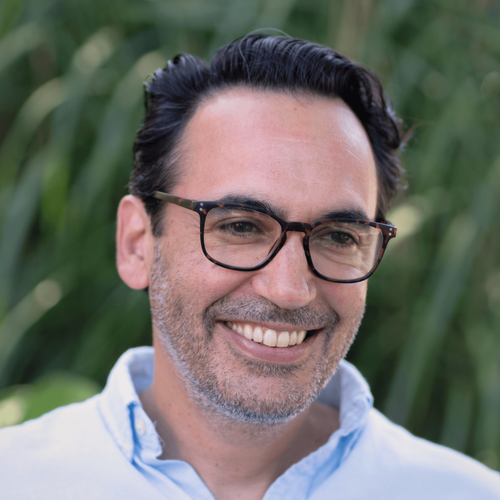
Justin Russo is the Director of Programming at the Institute for Music and Neurologic Function (IMNF), a nonprofit dedicated to advancing the therapeutic power of music to awaken, stimulate, and heal. In his role, Justin oversees IMNF’s training initiatives, including Best Practices from Music Therapy for Using Music in Senior Wellness and Healthcare and the MUSIC & MEMORY® Certification Program, which trains care professionals to implement personalized music as a non-pharmacological intervention for individuals living with dementia and related conditions. Since 2015, he has supported the Music & Memory program’s growth to over 5,800 certified healthcare organizations worldwide.

-
Dr. Joseph LeDoux has worked on emotion, memory, and consciousness in the brain since the mid 1970s. He is a Professor of Neural Science at New York University, and an elected member of the National Academy of Sciences, and the American Academy of Arts and Sciences. He has received numerous awards for his work and is the author of several books, including The Emotional Brain, Synaptic Self, Anxious, The Deep History of Ourselves, and The Four Realms ofExistence. Dr. LeDoux is the lead singer and songwriter in the rock band, the Amygdaloids He is also the subject of a documentary on Amazon called Neuroscience and Emotions: The Life, Work and Music of Dr. Joseph LeDoux, and his music has been the subject of a play called Map of Your mind. He and his music are also featured in Werner Herzog’s film, Theatre of Thought.
-
Advisory Board Member – Innerwave
Executive Director & Founder, Person-Centred Neurosciences Society
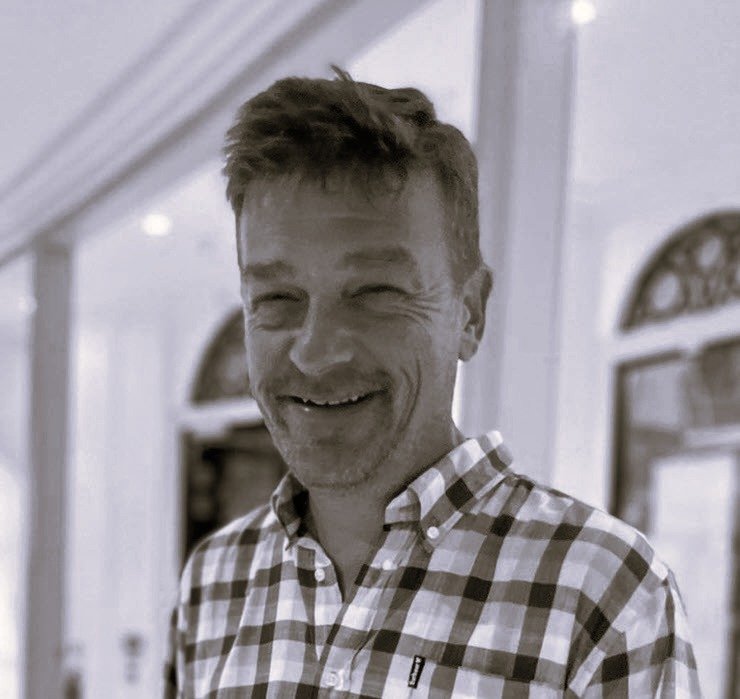
Neil Bindemann is a neuroscientist, neuroimmunology researcher, and systems thinker whose work bridges foundational neuroscience, emotional health, lived experience, and person-centred systems design. His focus is on how human nervous systems adapt — and sometimes over-adapt — to the environments in which they develop.
Neil completed his PhD at University College London (1988–1993), where his doctoral research focused on neurobiology and neuroimmunology, exploring bidirectional signalling between the nervous and immune systems. This early work established a lifelong interest in how threat, stress, and context shape physiological regulation. His academic training began earlier at the University of Glasgow, where he studied immunology and neuroscience from 1984.
In 2015, a trauma-informed re-examination of both personal and professional experience prompted Neil to revisit core assumptions within neuroscience — not to reject established models, but to explore where they struggle to fully account for lived human experience. Influenced by the work of Joseph LeDoux, particularly The Synaptic Self, Neil’s work respects the central role of synaptic processes in emotional learning and memory, while extending inquiry toward how emotional experience becomes embodied, persistent, and self-organising over time.
A central focus of Neil’s work is the exploration of how emotionally salient experiences can leave lasting, non-conscious imprints that shape perception, physiology, and behaviour. Drawing on neuroscience, neuroimmunology, and lived experience, he has helped articulate how Acquired Mind Injuries (AMI) may arise — not through structural brain damage, but through prolonged or unresolved patterns of emotional threat, neglect, or adaptation. In this context, Neil engages with contemporary discussions around emotional memory and imagery as descriptive phenomena, offering bridges between synaptic and systems-level neuroscience and first-person experience. This perspective has relevance for understanding chronic stress, functional symptoms, and long-term nervous system dysregulation, while staying aligned with established neuroscience rather than positioned in opposition to it.
Neil is also recognised for advancing person-centred neuroscience at a systems level. In 2005, he founded the Primary-Care Neurology Society, which evolved under his leadership into the Person-Centred Neurosciences Society in 2020 — the first society of its kind explicitly focused on integrating neuroscience with lifestyle, emotional health, and human meaning.
As a PhD advisory board member of Innerwave, Neil works alongside InnerWave CEO Todd Kunze, Dr. Joseph LeDoux, and Dr. Concetta Tomaino DA LCAT, MT-BC to support the ethical extension of contemporary neuroscience into real-world contexts. His advisory contribution is characterised by conceptual synthesis, careful questioning, and an ability to hold scientific rigour and lived experience in productive dialogue.
Neil’s work is guided by a simple organising principle:
“Human systems reorganise most effectively when understanding replaces force.”
-
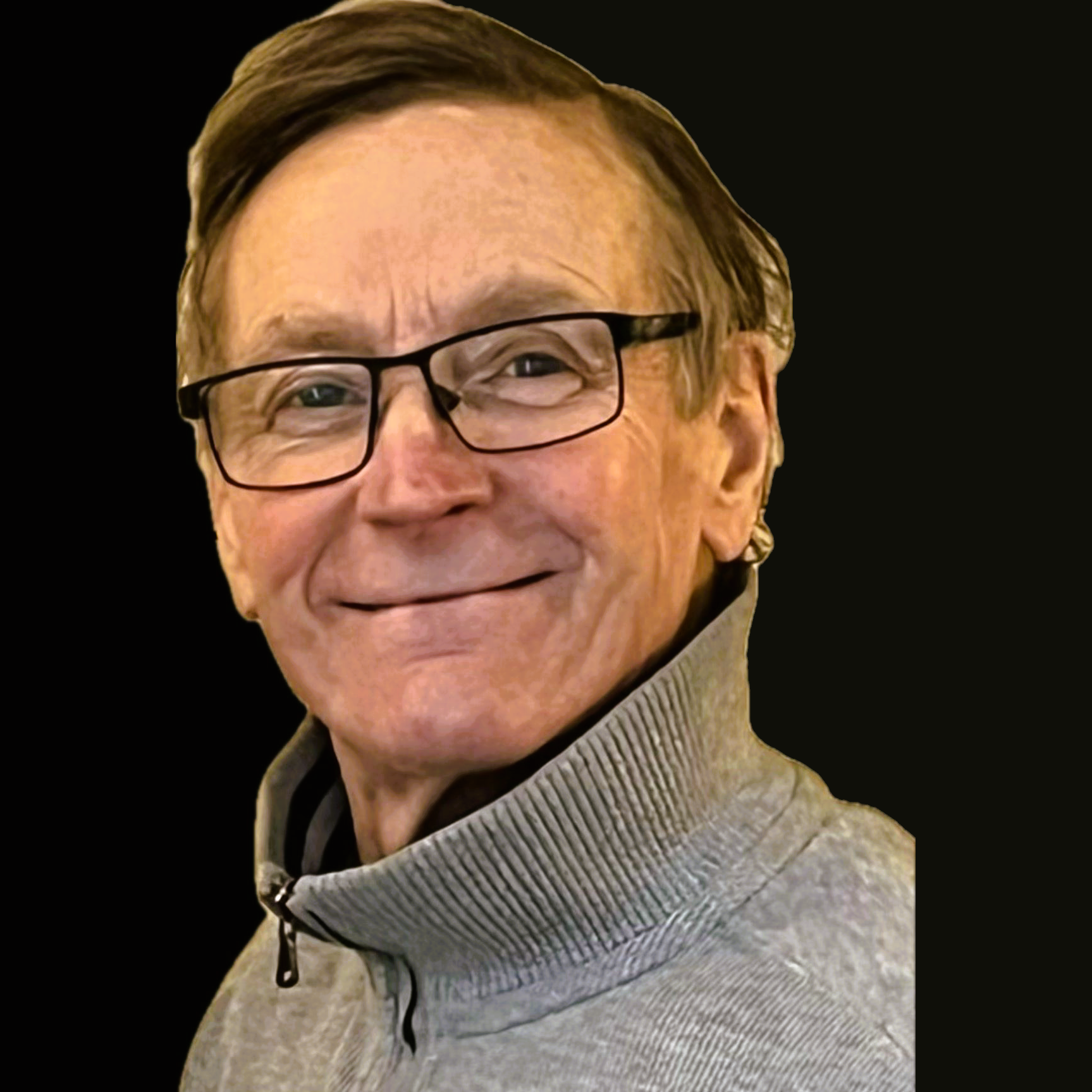
Graham Stephens, to date, has a long history of being involved with both Lifestyle behavioural change and Lifestyle Health, which now spans in excess of 40 years and founded primarily on two fronts. And, in 2015/2016 Graham, became involved with a new Lifestyle Medicine movement in the UK.
Graham is both a founder member of the British Society of Lifestyle Medicine along with being internationally qualified as a Lifestyle Medicine Practitioner. His skill sets as a practitioner and facilitator sits at the intersection of lived experience, creative crafts, emersion in nature and appropriately targeted recovery. His pathway through both lifestyle behavioural change and health did not emerge from theory first, but from a truly person-centred approach. This was often with extremely challenging groups. One example was Manchester (England) were he designed and developed a “systems approach” involving behavioural change with typically aged 14- to 16-year-old young men. These were from Manchester’s very serious youth gang scene. It is these periods of significant challenge that led him to explore how meaning, agency, and regulation can be restored through practical, embodied activity. This project ran highly successfully for nine years despite huge scepticism and gained three back-to-back (UK) Ofsted inspections at outstanding.
An often overlooked but formative influence in Graham’s development can be traced back to his early childhood. As a young boy, before secondary school, he developed a strong fascination with Indigenous Native American cultures — not through romanticised narratives of conquest, but through a deep interest in relationship to land, tracking, and ways of knowing grounded in observation and respect. Growing up in a small village among the Pennine moors between Lancashire and Yorkshire, this interest expressed itself practically, through learning to track local wildlife and spending long periods immersed in the natural environment. In adulthood, this early orientation matured into meaningful relationships and collaborations, including friendships with Robert Owens Greygrass (Lakota) and Lewis Mehl-Madrona, with whom he later collaborated on a podcast for the British Society of Lifestyle Medicine. This journey culminated in formal study with Albert Marshall and Lewis Mehl-Madrona in the practice of Two-Eyed Seeing — a framework that integrates Indigenous and Western knowledge systems — further grounding Graham’s work in humility, relational awareness, and respect for multiple ways of understanding health and healing.
Graham is also known for developing Woodwork to Wellness (W2W). At the heart of W2W (a Charity) it utilises a combination of modalities. They are a nature- and craft-based approach that supports emotional regulation, recovery from ill health including mental health, and reconnection with a small community. This is achieved through the purposeful making of “things and stuff”. This approach towards creative crafts emphasises the field of dialectical behaviour therapy (DBT). This is where the process of “Doing” by a sizable amount, becomes the therapist. This process is highly successful at creating environments where people can re-establish trust in themselves through doing, rather than being “worked on”.
Over time, Graham’s practice has evolved into a quietly sophisticated model of truly person-centred support, grounded in respect for individual pacing, non-verbal communication, and the restorative impact of their surroundings and skilled attention. He brings a rare combination of humility, practical wisdom, and relational sensitivity, particularly in an active workspace with people who have felt failed by more abstract or typically clinical approaches.
Graham now collaborates closely with Neil Bindemann, where his grounded experiential perspective complements neuroscience and emotionally informed frameworks. This continues to inform Graham in helping him bridge the lived experience in a more detailed way along with regulation and meaning, in a real-world setting, much of which includes various medical conditions. Examples include Mental Health, Cardiac Rehab, Stroke Rehab and many others.